

The Complete Guide to Cartridge Mechanical Seals
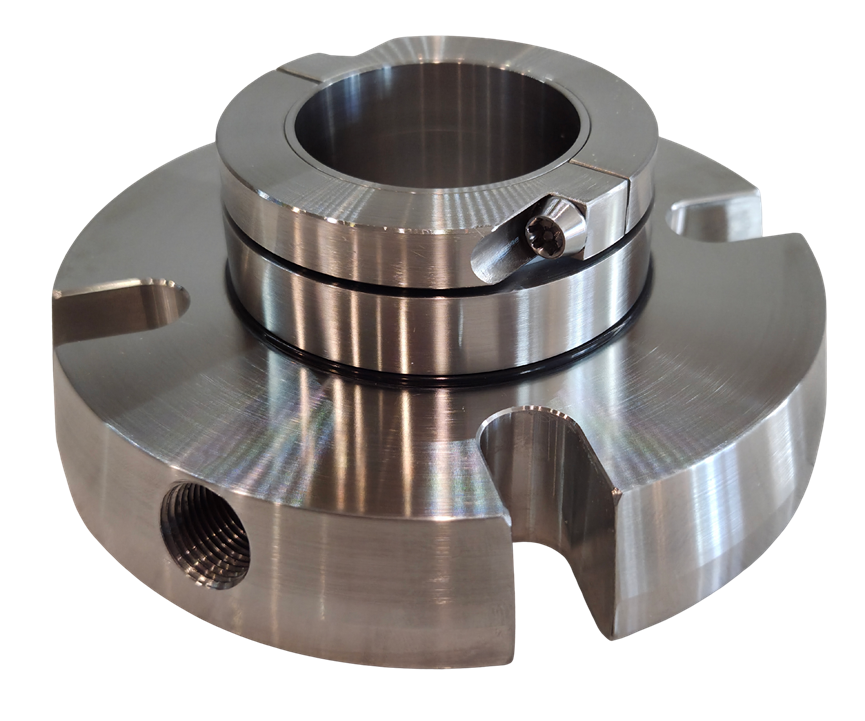
Paradigm Seals™ 8610 Single Cartridge Seal
Engineering Guide • 45-Minute Read • Updated August 2026
What You'll Learn
How They Work, How to Select One, and the Design Features That Improve Reliability
Cartridge mechanical seals have become the preferred sealing solution for ANSI process pumps because they simplify installation, improve reliability, and reduce maintenance costs. This guide explains how cartridge seals work, how to select the right seal for your application, common causes of seal failure, installation best practices, and the engineering principles that help maximize seal life.
Whether you're new to cartridge seals or looking to improve equipment reliability, this guide provides practical information to help you make informed maintenance and application decisions.
Prefer to Read Offline?
Download the Complete Guide to Cartridge Mechanical Seals (PDF/Word) to save, print, or share with your team.
Prepared by: Paradigm Seals LLC-Monument, Colorado ~ paradigmseals.com
THE PARADIGM PHILOSOPHY
The best mechanical seal isn't the most expensive one. It isn't the one with the most features.
It's the simplest seal that will reliably perform the application.
Every engineering decision should improve reliability, simplify maintenance, and reduce total cost of ownership.
About the Authors:
Stan Toal
Co-Founder, Paradigm Seals LLC
40+ years of experience in rotating equipment, pump reliability, and mechanical sealing systems. Stan has worked extensively with water and wastewater, mining, power generation, food processing, and general industrial applications. His experience includes seal application engineering, field troubleshooting, customer training, and reliability improvement.
Keith Toal
Co-Founder, Paradigm Seals LLC
50+ years in mechanical sealing technology including design, engineering, manufacturing, field service, sales, and customer training. Keith has spent his career helping customers improve rotating equipment reliability while reducing maintenance costs and total cost of ownership.
About Paradigm Seals
Paradigm Seals engineers and manufactures cartridge mechanical seals designed to simplify installation, improve reliability, and reduce the total cost of ownership. Every product is developed around a single philosophy:
Select the simplest seal that will reliably perform the application.
In This Guide
Main Components
How Cartridge Seals Work
Cartridge vs Component Seals
Cartridge vs Packing
Single vs Double Seals
Engineering Design Features
Selecting the Right Seal
Why Seals Fail
Frequently Asked Questions
Conclusion
Introduction
Mechanical seals are used on millions of pumps worldwide to prevent process fluids from leaking along rotating shafts. While component seals remain in service on many pumps, cartridge mechanical seals have become the preferred sealing solution for most industrial applications because they simplify installation, improve reliability, and reduce maintenance costs.
A cartridge mechanical seal is much more than a component seal assembled on a sleeve. Its design, materials, drive mechanism, flush system, and installation features all influence seal performance and service life. Understanding these differences is essential when selecting a seal that will provide reliable operation while minimizing downtime and total cost of ownership.
This guide explains how cartridge mechanical seals work, the function of their major components, the differences between cartridge, component, and packed seals, and the design features that have made modern cartridge seals the industry standard. It also discusses the key factors to consider when selecting a seal for a particular application and highlights the design principles that contribute to long-term reliability.
Whether you are specifying a seal for new equipment, replacing an existing seal, or simply expanding your understanding of sealing technology, the goal is the same: select the simplest, most reliable sealing solution for the application.
Main Components of a Cartridge Mechanical Seal
Understanding the function of each major component helps explain why cartridge mechanical seals have become the preferred sealing solution for most industrial pump applications. While manufacturers use different designs and proprietary features, every cartridge seal contains the same basic elements: seal faces, springs, a shaft sleeve, a gland plate, secondary sealing elements, and a drive mechanism. Each component plays a critical role in sealing performance, reliability, and service life.
Seal Faces
The seal faces are the heart of every mechanical seal, whether cartridge or component. They provide the primary sealing interface that prevents process fluid from escaping along the rotating shaft.
Seal faces are manufactured from materials selected for their ability to resist wear, dissipate heat, and withstand the demands of the application. Common face materials include carbon, silicon carbide, and tungsten carbide. Each material offers unique advantages depending on the pressure, temperature, fluid properties, and operating conditions.
The sealing surfaces are precision lapped to an exceptional degree of flatness—typically within two helium light bands. This level of precision allows the faces to operate with only a microscopic lubricating film of fluid between them.
Contrary to what many people assume, the seal faces do not run completely dry. During operation, an extremely thin fluid film develops between the faces. This microscopic film lubricates and cools the sealing surfaces while preventing excessive wear. Maintaining this fluid film is essential to seal performance and longevity.
Springs
The springs provide the closing force that keeps the seal faces in contact when the pump is not operating. Once the pump starts, the springs continue to perform an equally important function by allowing the seal faces to make microscopic adjustments as operating conditions change.
As the shaft moves due to vibration, thermal growth, or normal runout, the springs maintain consistent face loading while preserving the critical lubricating film between the seal faces. Without this flexibility, the faces would either separate excessively and leak or contact each other with too much force, generating heat and accelerating wear.
Cartridge seals employ a variety of spring designs, including multiple coil springs, wave springs, single heavy-duty springs, and welded metal bellows that function as both the spring and the secondary sealing element. Each design offers advantages for specific operating conditions.
Shaft Sleeve
One of the primary features that distinguishes a cartridge seal from a component seal is the shaft sleeve.
The sleeve serves as the foundation of the cartridge assembly by supporting and unitizing the rotating components into a single preassembled package. Because the rotating elements are assembled and factory-positioned on the sleeve, installation is simplified and critical dimensions are established before the seal reaches the customer.
The sleeve also protects the pump shaft from wear and damage, allowing the seal to be replaced without affecting the shaft itself.
Gland Plate
The gland plate secures the cartridge seal to the pump and provides the stationary mounting point for the seal assembly.
Although similar in appearance to the gland used with a component seal, a cartridge seal gland performs additional functions. It incorporates structural features that help unitize the assembly and often contains internal passages for flush, quench, or drain connections, depending on the seal design and application.
Modern cartridge seal designs may also incorporate internal flow passages that distribute flush fluid more uniformly around the seal faces to improve cooling and lubrication.
Secondary Sealing Elements
While the seal faces provide the primary seal, secondary sealing elements prevent leakage between stationary and rotating components.
These seals are typically O-rings, gaskets, or other elastomeric components selected to match the process fluid and operating temperature. Cartridge seals include many of the same secondary seals found in component seals but also require additional sealing elements, such as sleeve O-rings, because of their unitized construction.
Although often overlooked, secondary sealing elements play a critical role in overall seal reliability and should always be selected for compatibility with the process conditions.
Drive Mechanisms
The drive mechanism transfers rotational torque from the pump shaft to the rotating seal components while maintaining the correct axial position of the cartridge seal.
A typical cartridge seal incorporates two distinct drive systems: an internal drive and a shaft drive.
The internal drive transfers torque between the individual rotating components within the seal assembly. Numerous designs are used throughout the industry, including drive pins, drive dents, and drive lugs. While pins remain one of the most common and economical solutions, more robust designs such as solid drive dents and drive lugs provide improved strength and wear resistance. Because drive failures can lead directly to seal failure, many manufacturers place considerable emphasis on designing a durable internal drive system.
The shaft drive secures the entire rotating assembly to the pump shaft while establishing the correct axial location of the seal. Two primary approaches are used: set screw drives and friction clamp drives.
Traditional set screw drives provide excellent torque capacity and high-pressure capability by mechanically locking the sleeve to the shaft. However, the set screws can damage the shaft or sleeve, making future maintenance more difficult.
Friction clamp designs use one or more cap screws to compress the clamp uniformly around the shaft and sleeve. This creates sufficient clamping force to drive the rotating assembly while eliminating shaft damage caused by set screws. Although friction clamp designs generally have lower maximum pressure ratings than traditional set screw drives, they are more than adequate for the vast majority of industrial pump applications.
Paradigm's FastGrip™ friction clamp is one example of this approach. It distributes the clamping force uniformly around the shaft, eliminates shaft damage caused by set screws, and simplifies both installation and future seal removal.
_______________________
Engineering Advantage
Every component contributes to seal reliability, making engineering design just as important as material selection.
How a Cartridge Mechanical Seal Works
Although cartridge mechanical seals are available in many different designs, they all operate on the same fundamental principle: two precision-machined seal faces are held together while a microscopic lubricating film of fluid separates them.
One seal face rotates with the pump shaft while the mating face remains stationary within the gland. The springs apply the closing force necessary to keep the faces in contact, while the hydraulic forces generated by the process fluid establish a delicate balance that allows the faces to operate with only a microscopic fluid film between them. The film profile is non-uniform across the surface, exhibiting a wave-like pattern rather than an even distribution.
This fluid film is essential to seal performance. It lubricates and cools the seal faces, preventing excessive friction and wear. Contrary to popular belief, a properly operating mechanical seal is not completely leak-free. A minute amount of fluid continuously passes between the seal faces to maintain this lubricating film. In most applications, the leakage is so small that it vaporizes before becoming visible.
The rotating assembly typically consists of the rotating seal face, shaft sleeve, and drive mechanism, all of which rotate together with the pump shaft. The stationary assembly consists of the stationary seal face, springs, spring carrier, and gland plate, which remain fixed to the pump.
As the pump operates, shaft movement, vibration, thermal expansion, and pressure fluctuations continually change the operating conditions. The springs compensate for these small movements by maintaining consistent contact between the seal faces while preserving the critical lubricating film. This ability to accommodate changing operating conditions is one of the primary reasons mechanical seals provide such reliable service.
Many cartridge mechanical seals also incorporate provisions for an external flush. Depending on the application, the flush fluid may provide cooling, improve lubrication, remove solids from the seal chamber, or prevent product crystallization around the seal faces. The effectiveness of a flush system depends not only on the flow rate but also on how efficiently the fluid is delivered to the seal faces.
Some manufacturers introduce flush fluid through a single port, which directs cooling to one area of the seal. Other designs distribute the flush fluid around the circumference of the seal faces to provide more uniform cooling and lubrication. Paradigm's Distributed Flush design follows this approach by introducing flush fluid evenly around the shaft, promoting more consistent cooling and lubrication where it is needed most.
Ultimately, the reliability of any cartridge mechanical seal depends on maintaining the proper balance between face loading, lubrication, cooling, and alignment. When these conditions are maintained, a cartridge seal can provide years of dependable service while minimizing leakage, maintenance, and equipment downtime.
Engineering Advantage
Understanding that a mechanical seal requires a microscopic amount of leakage between the seal faces for lubrication helps explain why keeping the seal faces stable and the fluid between them clean and cool is essential to long seal life.
Advantages of Cartridge Mechanical Seals
The widespread adoption of cartridge mechanical seals has been driven by one primary objective: improving equipment reliability while reducing maintenance costs. Although faster installation is one of the most visible benefits, the true value of a cartridge seal lies in reducing installation errors, improving consistency, and lowering the total cost of ownership.
Component seals require multiple individual parts to be assembled and positioned on the pump during installation. Each component must be installed in the correct sequence and accurately located on the shaft or sleeve. Handling multiple parts increases the risk of contamination, accidental damage, or improper positioning before the pump is even started.
In many cases, the seal being replaced has already failed and is no longer available as a reliable reference. Even when a replacement seal appears identical, small differences in dimensions or assembly procedures can result in incorrect spring compression, improper face loading, or misalignment. These installation errors frequently lead to what is commonly referred to as "infant mortality" - a seal that fails shortly after startup, not because of a product defect, but because it was installed incorrectly.
A cartridge mechanical seal minimizes these risks because it is supplied as a completely assembled, factory-set unit. The installer simply positions the cartridge on the shaft, bolts the gland to the pump, secures the drive mechanism, and removes any setting devices if required. Critical operating dimensions have already been established during manufacturing, greatly reducing the opportunity for installation errors.
The benefits extend well beyond the initial installation. Because every replacement follows the same straightforward procedure, maintenance becomes more consistent and less dependent on the experience of the installer. Equipment returns to service more quickly, and the likelihood of repeated maintenance due to installation-related failures is significantly reduced.
While cartridge mechanical seals often have a higher initial purchase price than comparable component seals, purchase price represents only a small portion of the overall cost of sealing a pump. Labor, production losses, emergency repairs, replacement parts, and equipment downtime can quickly exceed the difference in seal cost. In many facilities, avoiding a single unplanned shutdown will more than offset the additional investment in a cartridge mechanical seal.
For these reasons, cartridge mechanical seals have become the preferred sealing solution for most industrial pump applications. Their ability to improve installation consistency, reduce maintenance requirements, increase equipment reliability, and lower total lifecycle costs has made them the industry standard for rotating equipment.
_______________________
Engineering Advantage
Reliable sealing depends on maintaining a microscopic lubricating film between the seal faces—not eliminating leakage entirely.
Cartridge Seals vs. Component Seals
For many years, component mechanical seals were the standard sealing solution for industrial pumps. They remain in service today and continue to perform well in many applications. However, advances in cartridge seal technology have made cartridge mechanical seals the preferred choice for most new installations because they simplify installation, improve reliability, and reduce maintenance costs.
The primary difference between the two designs is how they are installed.
A component seal consists of multiple individual parts that must be assembled and accurately positioned on the pump during installation. The installer is responsible for establishing the correct spring compression, seal face location, and axial positioning of each component. This process requires experience, precision, and careful attention to detail.
A cartridge mechanical seal arrives as a completely assembled, factory-set unit. Critical dimensions such as spring compression and face positioning have already been established during manufacturing. Installation is simplified to positioning the seal on the shaft, bolting the gland to the pump, securing the drive mechanism, and removing any setting devices if required.
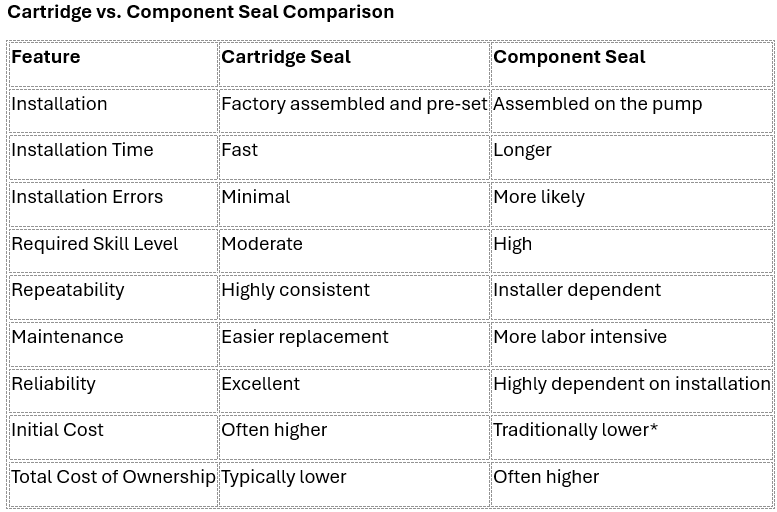
*Many legacy component seals have experienced significant price increases over the years and, in some cases, now cost as much as - or more than - a comparable cartridge seal.
Reducing installation errors is one of the greatest advantages of a cartridge mechanical seal. Handling multiple seal components increases the risk of contamination, accidental damage, or incorrect assembly before the pump is even started. Even small installation errors can affect spring loading or seal face alignment, leading to premature failure.
Because a cartridge seal is supplied as a complete assembly, these critical dimensions are established at the factory rather than in the field. Every replacement follows essentially the same installation procedure, resulting in more consistent performance regardless of who performs the installation.
The benefits continue throughout the life of the equipment. Maintenance personnel spend less time installing replacement seals, fewer installation-related failures occur, and equipment is returned to service more quickly. These improvements reduce labor costs, minimize downtime, and increase overall equipment reliability.
Although cartridge mechanical seals have traditionally been viewed as the more expensive option, that is not always true today. Many component seals are legacy designs that have remained in service for decades. Repeated price increases have caused the purchase price of some component seals to equal - or even exceed - that of a comparable cartridge seal.
When installation labor, maintenance, production losses, and equipment downtime are included, the total cost of ownership often favors the cartridge mechanical seal by a considerable margin. For this reason, cartridge seals have become the preferred sealing solution for most industrial pump applications.
_______________________
Engineering Advantage
Factory-set components reduce installation errors, improving reliability while lowering maintenance costs.
Cartridge Seals vs. Packing
For many years, compression packing was the standard sealing method for rotating equipment. Even today, packing continues to perform successfully in certain applications because of its simplicity, low initial cost, and ability to tolerate shaft movement and contaminated services.
However, advances in mechanical seal technology have made cartridge mechanical seals the preferred sealing solution for most industrial pumps. Their ability to reduce leakage, minimize maintenance, conserve water, and improve equipment reliability often results in a significantly lower total cost of ownership.
The fundamental difference between the two technologies is how they control leakage.
A mechanical seal is designed to operate with two precision-lapped seal faces separated by a microscopic lubricating film of fluid. This film provides lubrication and cooling while limiting leakage to an extremely small amount. In most applications, the leakage is so slight that it evaporates before it becomes visible.
Packing operates on a different principle. Rather than preventing leakage entirely, packing must leak to function properly. A controlled amount of leakage lubricates and cools the interface between the packing rings and the shaft sleeve. Without this lubrication, friction generates excessive heat, leading to rapid wear of both the packing and the shaft sleeve.
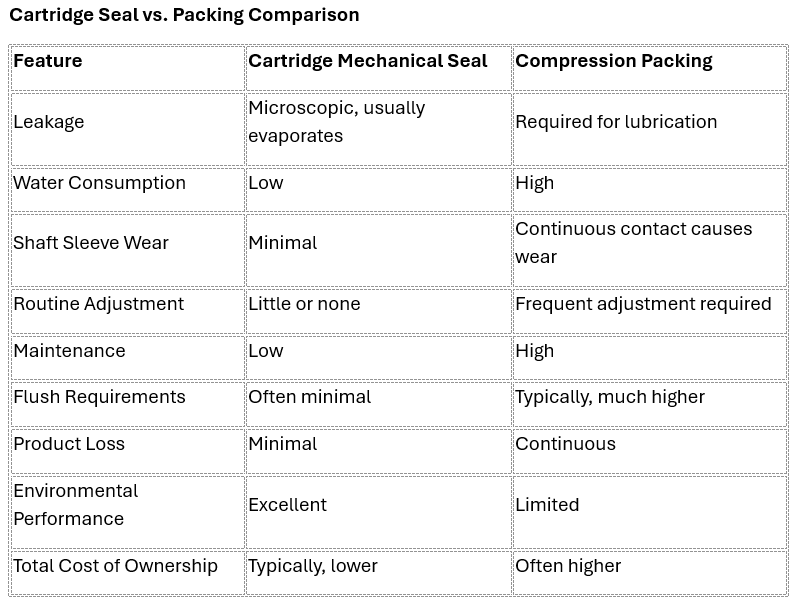
Most packed pumps require a lantern ring and an external supply of clean flush fluid. Selecting the proper flush pressure and flow rate is essential for reliable operation, yet these requirements are frequently misunderstood or improperly controlled. Because packing relies on continuous leakage for lubrication, flush rates are generally much higher than those required by a mechanical seal, resulting in greater water consumption and increased operating costs.
Packing also requires continual adjustment throughout its service life. Maintaining the proper leakage rate is a gradual process that often involves making small adjustments over several hours or even days. Tightening the packing too quickly or excessively can eliminate the lubricating film, causing overheating, accelerated wear, and damage to the shaft sleeve.
Many facilities simply no longer have the maintenance personnel available to provide the routine attention that packing requires. As experienced mechanics retire and maintenance staffs become leaner, equipment that requires frequent adjustment becomes increasingly difficult to manage.
A cartridge mechanical seal largely eliminates these maintenance concerns. Once properly installed, it requires little or no routine adjustment, significantly reduces leakage, minimizes water consumption, and provides more consistent long-term performance. Although the initial purchase price may be higher than that of packing, the savings in maintenance labor, water usage, product loss, and unplanned downtime frequently make a cartridge mechanical seal the more economical solution over the life of the equipment.
When Is Packing Still the Right Choice?
Despite the advantages of cartridge mechanical seals, packing remains a practical solution for some applications. Large shaft movement, severe misalignment, highly abrasive services, and certain low-speed applications may still favor packing or specialized sealing systems.
The key is selecting the sealing technology that best matches the application's operating conditions—not simply choosing the lowest initial purchase price.
_______________________
Engineering Advantage
Mechanical seals minimize leakage, maintenance, water consumption, and product loss compared to traditional packing.
Single vs. Double Cartridge Mechanical Seals
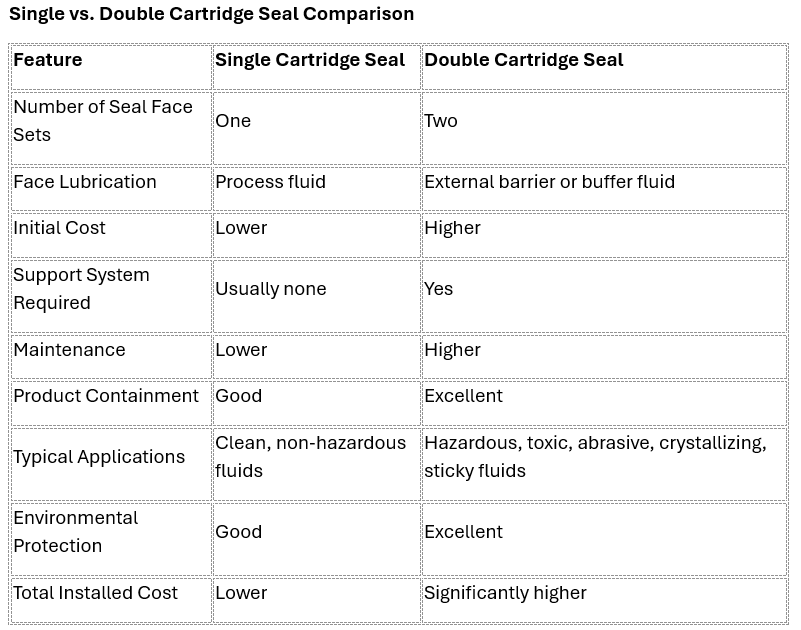
Selecting between a single and double cartridge mechanical seal is one of the most important decisions in any sealing application. While double seals are often viewed as the "premium" option, they are not necessarily the best choice. The objective is to select the simplest seal that will provide the required reliability, environmental protection, and service life.
Thanks to significant advances in seal face materials, cartridge seal designs, and slurry seal technology, modern single cartridge seals can successfully handle many applications that once required double seals. As a result, the majority of industrial pumps today can be reliably sealed using a properly selected single cartridge seal.
Double cartridge seals remain essential for applications where complete product containment, enhanced lubrication, or additional reliability is required. They should be selected because the application demands their capabilities - not simply because they are perceived as a better seal.
Single Cartridge Seals
A single cartridge mechanical seal uses one set of precision-lapped seal faces lubricated by a microscopic film of the process fluid. During normal operation, only an extremely small amount of product passes between the seal faces - typically so little that it evaporates before becoming visible.
Modern seal face materials such as silicon carbide, along with improved cartridge seal designs, have dramatically expanded the range of applications that can be successfully sealed with a single cartridge seal. Even many abrasive services that once required double seals can now be handled using specialized slurry seal designs.
For clean water, hydrocarbons, chemicals, wastewater, and many general industrial services, a properly selected single cartridge seal provides an excellent balance of reliability, simplicity, and cost.
Double Cartridge Seals
A double cartridge mechanical seal incorporates two independent sets of seal faces separated by a cavity supplied with an external support fluid.
Unlike a single seal, which depends on the process fluid for lubrication, a double seal is lubricated and cooled by an external barrier or buffer fluid. This clean fluid improves seal face lubrication, removes heat, and, depending on the system selected, provides varying levels of product containment.
Barrier Systems (Pressurized)
Barrier systems operate at a pressure higher than the seal chamber pressure.
The clean barrier fluid completely isolates the process fluid from the atmosphere while lubricating and cooling both sets of seal faces. Because the barrier pressure always exceeds the process pressure, product leakage to atmosphere is virtually eliminated.
Barrier systems are commonly selected for:
Hazardous chemicals
Toxic products
Flammable liquids
Volatile hydrocarbons
Environmentally regulated services
Buffer Systems (Unpressurized)
Buffer systems operate at a pressure lower than the seal chamber pressure.
The buffer fluid cools and lubricates the atmospheric seal while allowing a controlled amount of process fluid to enter the seal cavity. Buffer systems improve seal reliability and provide additional environmental protection, although they do not provide the complete product isolation achieved by a pressurized barrier system.
They are frequently used where improved reliability is desired but absolute containment is not required.
Seal Arrangements
Double cartridge seals are commonly manufactured in three arrangements:
Back-to-Back – The most common arrangement for pressurized barrier systems because it provides excellent pressure capability and product containment.
Face-to-Face – A compact arrangement often used where space is limited or operating pressures are moderate.
Tandem – Two seals installed in the same direction, typically used with unpressurized buffer systems or applications where containment of leakage is the primary objective.
The proper arrangement depends on the application, operating conditions, and selected seal support system.
Making the Right Choice
Although double cartridge seals provide exceptional containment and reliability, they also require additional equipment, including a barrier or buffer support system, instrumentation, piping, and routine maintenance.
For many applications, this added complexity is unnecessary.
Modern single cartridge seals are capable of handling a much wider range of services than they could just a few decades ago. When a single seal can provide the required service life and reliability, it is almost always the better economic choice. Eliminating the second set of seal faces, support system, instrumentation, piping, and associated maintenance results in a simpler installation, lower operating costs, and a significantly lower total cost of ownership.
The best seal is not the most complex or the most expensive - it is the simplest seal that reliably meets the application's requirements.
_______________________
Engineering Advantage
Select the simplest seal that will reliably perform the application—complexity should solve a problem, not create one.
Engineering Design Features That Improve Reliability
Not all cartridge mechanical seals are designed the same. While they perform the same basic function, the engineering decisions made by the manufacturer can significantly affect reliability, service life, ease of installation, and maintenance.
The following design features illustrate how seemingly small engineering differences can have a substantial impact on long-term seal performance.
Stationary vs. Rotating Seal Designs
One of the most important design decisions in a cartridge mechanical seal is whether the springs rotate with the shaft or remain stationary.
In a rotating seal design, the springs rotate continuously with the shaft. As they pass through areas of shaft runout, stuffing box misalignment, and thermal distortion, the springs repeatedly compress and relax. Over millions of operating cycles, this continual flexing can contribute to spring fatigue and eventual failure.
In a stationary seal design, the springs remain fixed within the gland while only the rotating seal face and sleeve rotate with the shaft. Because the springs do not continuously flex as they rotate, they operate under much more stable conditions.
Stationary designs also tolerate slight stuffing box misalignment more effectively. If one spring is compressed slightly more than another because of minor misalignment, that condition remains constant rather than cycling with every shaft revolution.
For these reasons, stationary seal designs are generally preferred for demanding industrial applications, and Paradigm selected a stationary design for the 8610™ cartridge seal.
Monolithic vs. Shrink-Fit Seal Faces
Seal faces are manufactured using either a monolithic construction or a shrink-fit design.
A monolithic seal face is machined from a single piece of tungsten carbide, silicon carbide, or carbon. Because it consists of one homogeneous material, thermal expansion occurs uniformly throughout the face.
Shrink-fit designs consist of a seal face insert mounted inside a metal carrier. Since the insert and carrier expand and contract at different rates as temperature changes, the sealing surface can become distorted.
Considering that seal faces are lapped within approximately two helium light bands flat, even small amounts of distortion can influence sealing performance.
For this reason, monolithic seal faces generally provide greater dimensional stability and are preferred for demanding industrial services. Paradigm selected monolithic seal faces to maximize sealing performance and long-term reliability.
Internal Drive Design
Every cartridge mechanical seal requires an internal drive mechanism to transfer torque between the rotating components.
Several methods are used throughout the industry, including drive pins, drive dents, and drive lugs.
Drive pins provide a simple and economical solution that performs well in many applications. Drive dents offer increased strength and wear resistance, particularly when solid drive dents are used.
The most robust approach is generally considered to be a lug drive, where large drive lugs transmit torque directly between major rotating components.
Because larger contact surfaces reduce localized stresses and wear, lug drive systems are well suited for demanding industrial services. This is the approach selected for Paradigm cartridge seals.
Distributed Flush Design
When external flush is required, the effectiveness of the flush depends not only on the amount of fluid supplied but also on how efficiently it reaches the seal faces.
Many cartridge seals introduce flush fluid through a single port. Although effective in many applications, this approach tends to concentrate cooling in one area of the seal.
Distributed flush systems introduce flush fluid evenly around the circumference of the shaft, providing more uniform lubrication and cooling across both seal faces.
More uniform cooling helps reduce localized hot spots while improving overall seal performance.
Paradigm incorporates a Distributed Flush design because of these advantages.
FastGrip™ Friction Clamp
The shaft drive is one of the most critical components of a cartridge mechanical seal.
Traditional set screw drives provide excellent torque transmission but permanently mark the shaft or sleeve. After years of operation, corrosion products and deposits around the set screw locations often make seal removal difficult.
Paradigm's patented FastGrip™ friction clamp distributes clamping force uniformly around the shaft rather than concentrating it at individual set screws.
This approach eliminates shaft damage while providing ample torque capacity for the vast majority of industrial pump applications. It also greatly simplifies seal removal after years of service because there are no set screw impressions locking the sleeve to the shaft.
Stan’s Real-World Example:
A customer with a high volume of ANSI style pumps in his operation - thus experienced a high number of repairs - was constantly purchasing new pump sleeves even though he was using cartridge mechanical seals. The reason, when the mechanic went to remove the cartridge seal the OEM pump sleeve would be stuck because it was impossible to back off the tiny set screws on the cartridge seal lock ring because they were encrusted with product. He took one look at a cartridge seal utilizing a single cap screw design and knew right away this would save the plant a tremendous amount of money.
TriLock™ Bushing
The TriLock™ bushing performs several important functions within the cartridge seal.
First, it precisely establishes the relationship between the rotating assembly and the gland, maintaining proper operating clearances.
Second, it functions as a close-clearance disaster bushing. Should a catastrophic seal face failure occur, the close clearance between the bushing and sleeve helps restrict leakage, allowing fluid to exit in a much more controlled manner rather than spraying freely to atmosphere.
Finally, the TriLock™ design locks the assembly in the X, Y, and Z directions during installation, eliminating the need for traditional centering clips while helping maintain the correct seal position throughout installation.
FlushControl+™
External flush systems often deliver considerably more flush water than is actually required for reliable seal operation.
Historically, restricting flush flow required the installation of a separate restrictor bushing within the stuffing box.
Paradigm's optional FlushControl+™ integrates the restrictor bushing directly into the cartridge seal. When required by the application, it can be installed quickly without modifying the pump.
By optimizing flush flow, FlushControl+™ helps maintain pressure on fluids operating near their vapor point, reduces unnecessary water consumption, and promotes improved seal lubrication and reliability.
Why These Features Matter
Every cartridge mechanical seal manufacturer must make engineering decisions regarding spring location, drive systems, seal face construction, flush design, and installation features.
Individually, each design decision may appear minor. Collectively, however, these decisions determine how easily the seal installs, how reliably it operates, how much maintenance it requires, and how long it remains in service.
Paradigm's engineering philosophy has been to simplify installation, improve reliability, and reduce total cost of ownership by selecting design features that address the most common causes of mechanical seal failure rather than simply adding complexity.
_______________________
Engineering Advantage
Small engineering improvements often produce the greatest gains in reliability, maintainability, and seal life.
Selecting the Right Cartridge Mechanical Seal
Selecting the proper cartridge mechanical seal involves much more than matching the shaft size or pump model. Every application is unique, and the most reliable sealing solution depends on the operating conditions, process fluid, equipment design, and maintenance objectives.
The goal is not to select the most expensive seal or the most sophisticated design. The objective is to select the simplest seal that will provide reliable performance while minimizing maintenance, downtime, and total cost of ownership.
The following factors should always be evaluated when selecting a cartridge mechanical seal.
1. Pump Type
The first consideration is the type of rotating equipment being sealed.
Cartridge mechanical seals are available for a wide variety of equipment, including:
ANSI process pumps
End-suction centrifugal pumps
Split-case pumps
Vertical turbine pumps
Vertical in-line pumps
Progressive cavity pumps
Mixers and agitators
Each equipment type has different shaft movement, seal chamber dimensions, and installation requirements that influence seal selection.
2. Process Fluid
The process fluid often determines the type of seal required.
Questions to consider include:
Is the fluid clean or dirty?
Does it contain solids?
Is it abrasive?
Does it crystallize?
Does it polymerize?
Is it hazardous?
Is it toxic?
Is it environmentally regulated?
Does it provide adequate lubrication?
For many clean industrial services, a single cartridge seal is the preferred solution.
Hazardous, crystallizing, sticky, or poorly lubricating fluids may require a double cartridge seal with an appropriate barrier or buffer system.
3. Pressure
Pressure affects both the seal design and the drive mechanism.
Many people assume the seal faces determine pressure capability. In reality, the drive mechanism often becomes the limiting factor.
For example, friction clamp designs provide excellent performance for most industrial services, while higher-pressure applications may require more robust drive systems.
When operating pressures approach the design limits of the seal, consult the manufacturer to verify suitability.
4. Temperature
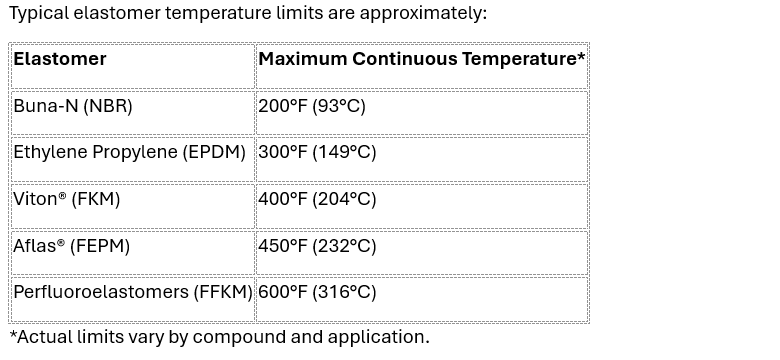
Temperature influences material selection far more than seal design.
In most applications, the seal faces themselves can tolerate temperatures well beyond the limits of the elastomers.
As operating temperatures increase, selecting the proper elastomer becomes increasingly important.
5. Seal Chamber Configuration
Not every pump has the same seal chamber.
ANSI pumps, for example, may be supplied with:
Standard bore chambers
Taper bore chambers
Large (Big Bore) chambers
Selecting the incorrect seal chamber configuration will prevent proper installation.
Always verify the pump's seal chamber dimensions before ordering a replacement seal.
6. Shaft Movement
Shaft deflection, vibration, and runout significantly influence seal life.
Long overhung shafts, worn bearings, cavitation, and operating away from the pump's Best Efficiency Point (BEP) all increase shaft movement.
Selecting a seal capable of accommodating these operating conditions improves long-term reliability.
7. Support Systems
Some applications require additional support systems.
These may include:
External flush systems
Barrier systems
Buffer systems
Quench systems
Selecting the proper support system is just as important as selecting the seal itself.
A Simple Selection Process
When evaluating an application, the following approach provides an excellent starting point.
Step 1
Can the application be reliably sealed with a single cartridge seal?
Yes → Continue.
No → Evaluate a double cartridge seal.
Step 2
Is the process fluid hazardous, toxic, environmentally regulated, or poorly lubricating?
Yes → Consider a double cartridge seal with an appropriate barrier or buffer system.
No → Continue.
Step 3
Does the application require an external flush?
Yes → Select the proper flush plan and flow control strategy.
No → Continue.
Step 4
Verify:
Pump type
Seal chamber
Shaft size
Pressure
Temperature
Fluid compatibility
Elastomer selection
Only after these factors have been confirmed should the final seal be selected.
When in Doubt...
Every sealing application presents its own challenges. Selecting the correct cartridge seal requires balancing reliability, maintainability, environmental performance, and cost.
Modern cartridge seals are capable of handling a remarkably wide range of services, but no single design is ideal for every application. When uncertainty exists, consulting the seal manufacturer before ordering a replacement is far less expensive than selecting the wrong seal.
At Paradigm, our philosophy is simple: recommend the simplest cartridge seal that will reliably perform the application. That approach minimizes complexity, reduces maintenance, and delivers the lowest total cost of ownership.
_______________________
Engineering Advantage
Successful seal selection depends on understanding the application—not simply matching the pump or shaft size.
Why Cartridge Mechanical Seals Fail
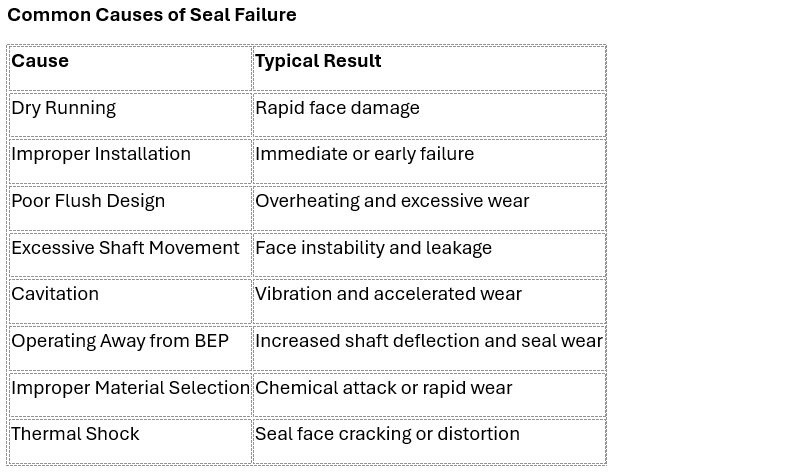
Mechanical seals are often blamed when leakage occurs, but in reality, the seal is frequently the victim rather than the cause of the failure. Most premature seal failures result from operating conditions, improper installation, or equipment problems rather than defects in the seal itself.
Understanding the most common causes of seal failure can help improve reliability, extend seal life, and reduce unnecessary maintenance costs.
Dry Running
Dry running is one of the fastest ways to destroy a mechanical seal.
The seal faces depend on a microscopic lubricating film of liquid for cooling and lubrication. Without that film, friction increases almost instantly, generating enough heat to damage the seal faces within seconds.
Dry running can occur for many reasons, including:
Closed suction valves
Closed discharge valves
Loss of pump prime
Empty supply tanks
Air entrainment
Pump operating far from its Best Efficiency Point (BEP)
Even if liquid flow is quickly restored, the seal faces may already have been permanently damaged. Proper startup procedures and adequate operator training remain the best defense against dry-running failures.
Improper Installation
Although cartridge seals are much easier to install than component seals, improper installation can still lead to premature failure.
Common installation mistakes include:
Failure to remove setting devices
Improper tightening of the drive mechanism
Dirty or damaged shaft sleeves
Failure to lubricate elastomers
Improper gland bolt tightening
Failure to verify shaft rotation after installation
Following the manufacturer's installation instructions greatly reduces these risks and improves long-term reliability.
Poor Flush Design
When an external flush is required, the flush system becomes an integral part of the sealing system.
Simply increasing flush pressure or flow does not necessarily improve seal life. Excessive flush flow wastes water, while insufficient flow may fail to remove heat or contaminants from the seal faces.
Proper flush system design considers:
Fluid cleanliness
Pressure differential
Flow rate
Flush location
Seal chamber geometry
Uniform distribution of flush fluid around the seal faces generally provides better cooling than introducing fluid through a single location.
Stan’s Real-World Example:
Recently a customer experienced premature seal failures on an application that ran for years trouble free. The seal faces tipped us off because of high wear observed were prior no wear was detected. Upon the customer cutting open the barrier tank it was discovered corrosion had built up causing lose particulates to contaminate the barrier fluid. When barrier fluid pressure is lost the pumped product can contaminate the tank. When this happens time after time eventually the tank will have to be replaced.
Excessive Shaft Movement
Mechanical seals are designed to accommodate normal shaft movement, but excessive shaft deflection can reduce seal life dramatically.
Common causes include:
Worn bearings
Bent shafts
Pipe strain
Cavitation
Operating away from Best Efficiency Point (BEP)
Long overhung shafts
Engineers often evaluate shaft stiffness using the L³/D⁴ relationship because relatively small increases in shaft length produce much larger increases in shaft deflection.
Improving pump operating conditions often produces greater gains in seal life than changing seal designs.
Material Selection
Selecting inappropriate seal face materials or elastomers can significantly reduce seal life.
For example:
Carbon versus silicon carbide
Silicon carbide versus silicon carbide
Elastomer compatibility
Temperature limitations
Proper material selection should always consider:
Fluid chemistry
Abrasiveness
Temperature
Pressure
Lubricating properties
The best seal design cannot compensate for improper material selection.
Stan’s Real-World Example:
Over many decades of doing seal failure analysis, I observed that 80% of the failures could be attributed to either the incorrect elastomer being selected for the application or an inferior elastomer material was being used. It is not always an O-ring, occasionally a gasket can be the culprit. Sometimes customers had the belief that the application was one temperature when it actually was a different temperature. Often, only with deep investigations can these issues be brought to light.
Seal Failure Is Often a Symptom
One of the most common misconceptions is that replacing a failed seal with another seal will solve the problem.
If the underlying cause of the failure has not been corrected, the replacement seal will often fail in the same manner.
Whenever a seal fails prematurely, the following questions should be asked:
Why did the seal fail?
Was the failure caused by the seal or the application?
Has the root cause been corrected?
Is the selected seal appropriate for the operating conditions?
A root cause analysis should always be performed before replacing a failed seal. Identifying and correcting the underlying problem is far more effective than repeatedly replacing seals.
_______________________
Engineering Advantage
Understanding why seals fail is the first step toward selecting a seal that delivers longer, more reliable service.
Frequently Asked Questions
What Is a Cartridge Mechanical Seal?
A cartridge mechanical seal is a completely assembled, pre-set mechanical seal that installs on the pump as a single unit. The assembly typically includes the seal faces, springs, shaft sleeve, gland plate, secondary sealing elements, and drive mechanism.
Unlike a component seal, which requires the installer to assemble and accurately position multiple parts on the pump, a cartridge seal is factory assembled and preset to the proper operating dimensions. This greatly simplifies installation while reducing the potential for installation errors that can lead to premature seal failure.
Today, cartridge mechanical seals have become the preferred sealing solution for most industrial pumps because they improve reliability, reduce maintenance, and lower the total cost of ownership.
What Are the Advantages of a Cartridge Mechanical Seal?
The greatest advantage of a cartridge mechanical seal is consistency. Because every seal is assembled and preset at the factory, installation is faster, simpler, and much less dependent on the skill of the installer.
Additional advantages include:
Reduced installation errors
Improved reliability
Lower maintenance costs
Minimal routine adjustment
Reduced leakage
Lower water consumption compared to packing
Easier replacement during future maintenance
Lower total cost of ownership
Although the initial purchase price may be higher than some component seals or packing, the savings in labor, downtime, and maintenance often outweigh the difference many times over.
How Long Does a Cartridge Mechanical Seal Last?
There is no universal answer because seal life depends almost entirely on the application.
In severe services involving abrasives, crystallizing fluids, poor lubrication, or frequent dry running, a seal life of only a few months may be considered excellent.
Conversely, clean water applications operating under stable conditions have been known to run for twenty years or more without seal replacement.
For most industrial pump applications, a properly selected and installed cartridge mechanical seal should typically provide between two and eight years of reliable service. The actual life depends far more on operating conditions than on the seal itself.
Are Cartridge Mechanical Seals Repairable?
Yes. Most cartridge mechanical seals can be repaired if the major components remain in good condition.
Traditional repair usually involves disassembling the seal, cleaning the components, replacing worn parts such as O-rings and seal faces, and then reassembling and testing the seal.
Some manufacturers, including Paradigm, have developed simplified repair systems that reduce both repair time and cost. Paradigm's QuickCore+™ cassette system allows the complete sealing element to be replaced with a new factory-tested core rather than rebuilding the existing cartridge. This approach minimizes downtime while providing the confidence of installing a new sealing assembly.
Whether repair or replacement is the better option depends on the condition of the seal, the cost of labor, and the criticality of the application.
What Is the Difference Between Single and Double Cartridge Seals?
A single cartridge seal contains one set of seal faces lubricated by the process fluid. It is suitable for the majority of industrial pump applications handling clean or moderately contaminated fluids.
A double cartridge seal contains two sets of seal faces separated by a cavity supplied with a barrier or buffer fluid. This external fluid lubricates and cools the seal faces while providing additional product containment.
Double seals are commonly selected for hazardous, toxic, flammable, crystallizing, or poorly lubricating fluids, while single seals remain the preferred solution whenever the application allows because of their simplicity, lower cost, and reduced maintenance requirements.
Can a Cartridge Mechanical Seal Replace Packing?
In most cases, yes.
Many pumps originally supplied with compression packing can be converted to cartridge mechanical seals with little or no modification.
Replacing packing with a cartridge seal typically results in:
Dramatically reduced leakage
Lower water consumption
Elimination of routine packing adjustments
Reduced shaft sleeve wear
Improved equipment reliability
Lower maintenance costs
Because packing requires continuous leakage for lubrication, it also requires considerably more operator attention than a cartridge mechanical seal. Many facilities convert packed pumps simply to reduce maintenance labor and improve overall equipment reliability.
Why Do Mechanical Seals Fail?
Most mechanical seal failures are not caused by defects in the seal itself.
The most common causes include:
Dry running
Improper installation
Poor flush design
Excessive shaft movement
Cavitation
Improper material selection
Operating far from the pump's Best Efficiency Point (BEP)
Understanding and correcting the root cause is essential before installing another seal.
How Much Leakage Is Normal?
A common misconception is that a mechanical seal should never leak.
In reality, every mechanical seal operates with a microscopic lubricating film between the seal faces. This film is necessary to cool and lubricate the faces.
A properly operating single cartridge seal typically leaks such a small amount that it evaporates before becoming visible. Visible leakage often indicates worn seal faces, improper installation, or another underlying problem that should be investigated.
When Should I Use a Double Cartridge Seal?
A double cartridge seal should be selected when the application requires capabilities beyond those of a single seal.
Typical reasons include:
Hazardous chemicals
Toxic fluids
Flammable products
Crystallizing fluids
Poorly lubricating liquids
Environmental regulations
Applications where zero visible leakage is desired
For the majority of industrial services, however, a properly selected single cartridge seal provides the best balance of reliability, simplicity, and cost.
Why Are Cartridge Mechanical Seals More Expensive?
Although cartridge seals often have a higher purchase price than component seals or packing, the purchase price represents only a small portion of the total lifecycle cost.
A cartridge seal reduces installation time, minimizes installation errors, lowers maintenance costs, decreases water consumption, and reduces unplanned downtime.
When these factors are considered, cartridge mechanical seals frequently become the most economical sealing solution over the life of the equipment.
Conclusion
Over the past several decades, cartridge mechanical seals have transformed the way rotating equipment is sealed. By combining the sealing components into a single factory -assembled unit, cartridge seals have dramatically simplified installation while improving reliability and reducing maintenance costs.
Today's cartridge seals are capable of operating in an exceptionally wide range of services. Advances in seal face materials, drive mechanisms, stationary designs and flush technology have expanded their capabilities well beyond what was possible only a few decades ago. As a result, cartridge mechanical seals have become the preferred sealing solution for most industrial pump applications.
As this guide has shown, however, not all cartridge mechanical seals are designed alike. Differences in engineering - such as stationary versus rotating designs, monolithic versus shrink-fit seal faces, drive mechanisms, flush systems and installation features - can significantly influence long-term reliability and ease of maintenance. Understanding these differences allows engineers and maintenance professionals to make better-informed sealing decisions.
Just as importantly, selecting the proper seal is about more than choosing a manufacturer or the most advanced design. The objective is to understand the application and select the simplest sealing solution capable of providing the required reliability, environmental performance, and service life. In many applications, a properly selected single cartridge seal will provide years of dependable operation at the lowest total cost of ownership. In others, a double cartridge seal with the proper support system is essential. Sound engineering judgment - not unnecessary complexity - should always drive the selection.
At Paradigm Seals, that philosophy guides every product we design. Rather than adding complexity for its own sake, we focus on engineering features that simplify installation, improve reliability, reduce maintenance, and lower the total cost of ownership. Whether through our stationary seal design, monolithic seal faces, lug drive system, Distributed Flush technology, FastGrip™, TriLock™, or FlushControl+™, every design decision is intended to solve real-world sealing challenges faced by maintenance and reliability professionals.
Mechanical seals will continue to evolve as materials, manufacturing methods, and engineering practices advance. Yet the fundamental objective will remain unchanged: provide reliable sealing with the lowest practical lifecycle cost. By understanding the principles presented in this guide, engineers, maintenance professionals, and equipment operators can make better sealing decisions that improve equipment reliability, reduce downtime, conserve resources, and maximize the return on every maintenance dollar invested.
Select the simplest seal that will reliably perform the application.
That's the Paradigm Advantage™.
Prefer an offline version?
Download the Complete Guide to Cartridge Mechanical Seals (PDF).
Need Application Assistance?
Every sealing application is unique. If you need help selecting the right cartridge mechanical seal, troubleshooting a recurring issue, or improving equipment reliability, the Paradigm engineering team is here to help.
Contact us at support@paradigmseals.com, and we'll work with you to review your application and recommend the best solution for your equipment and operating conditions.
